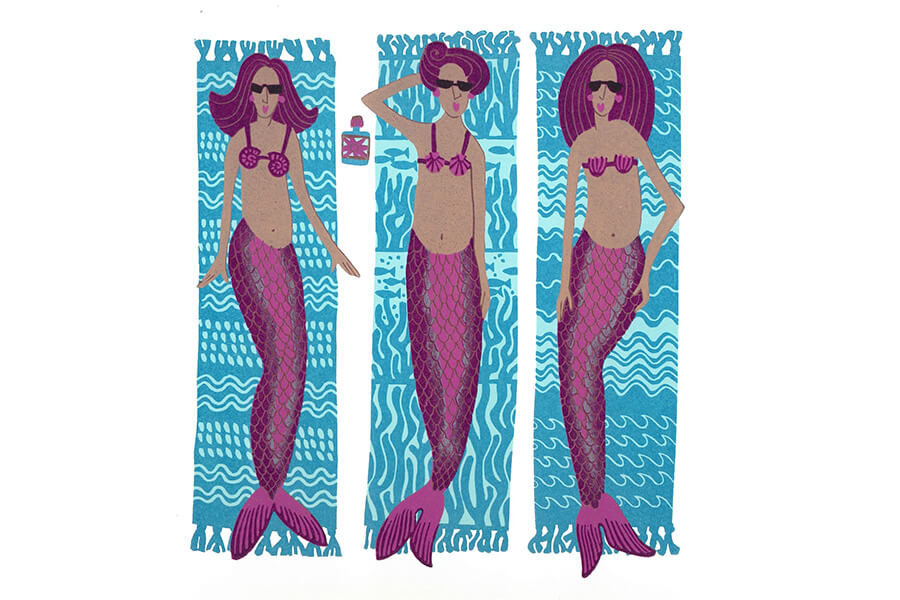
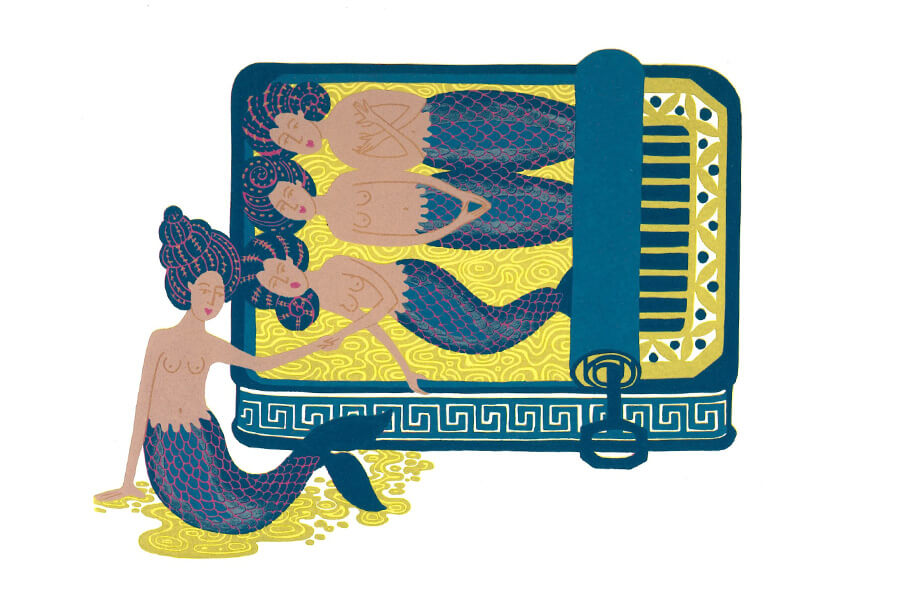
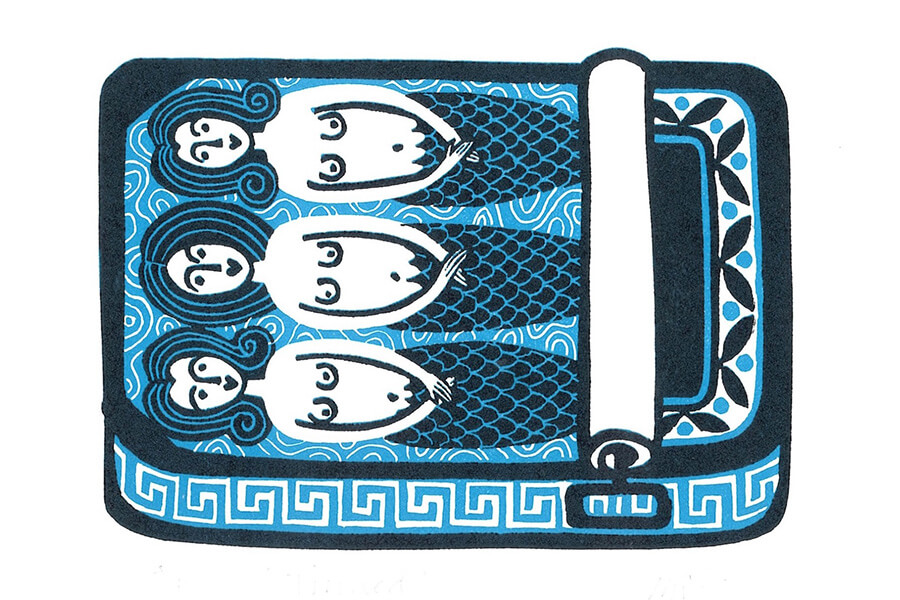
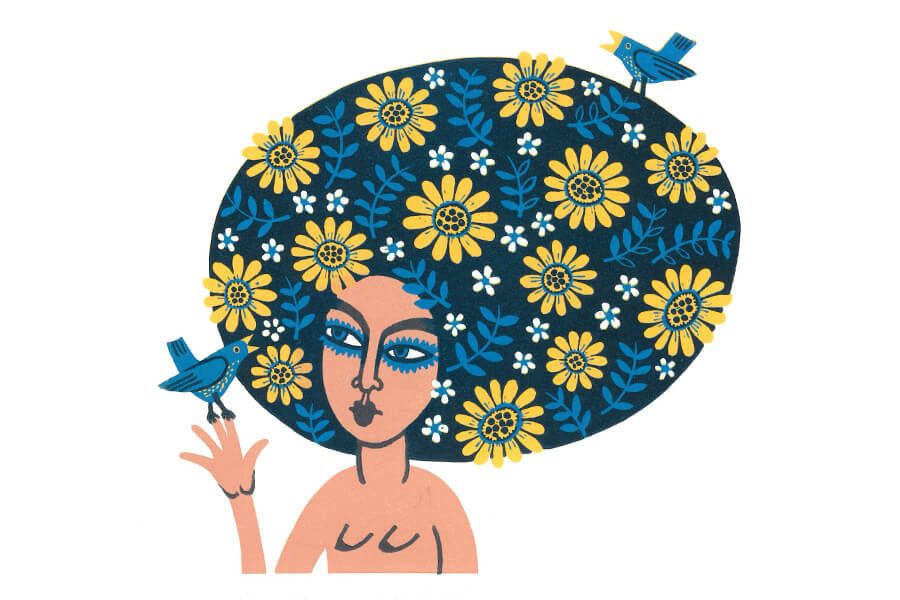
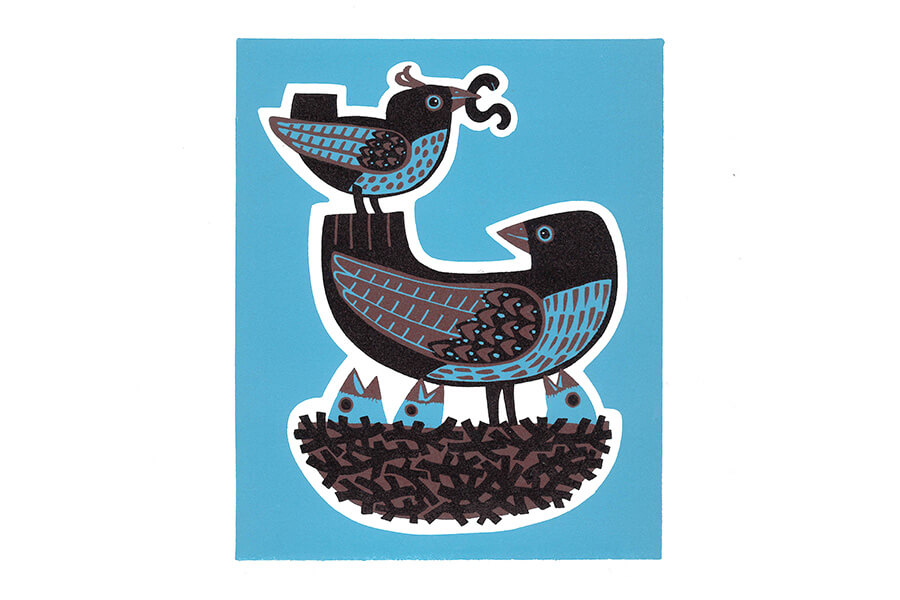
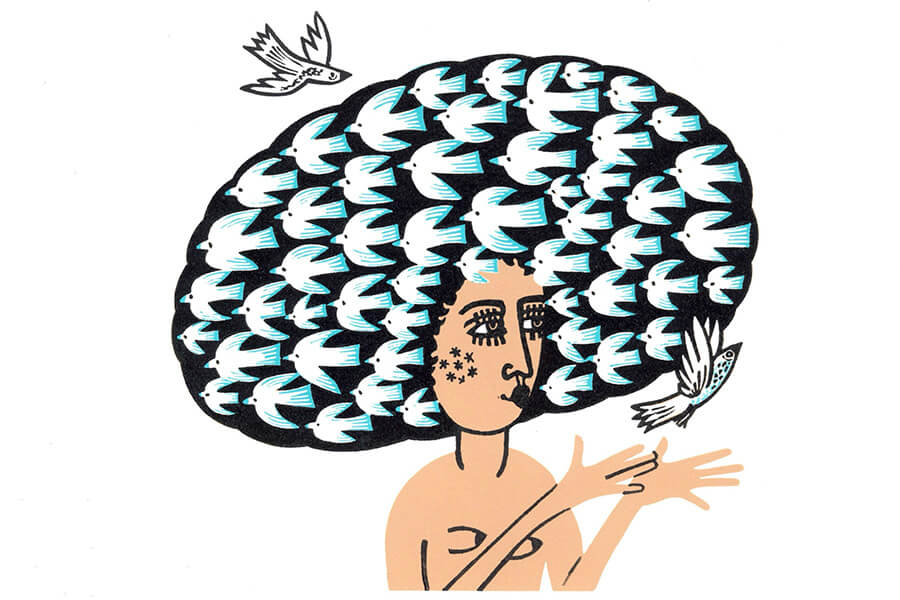
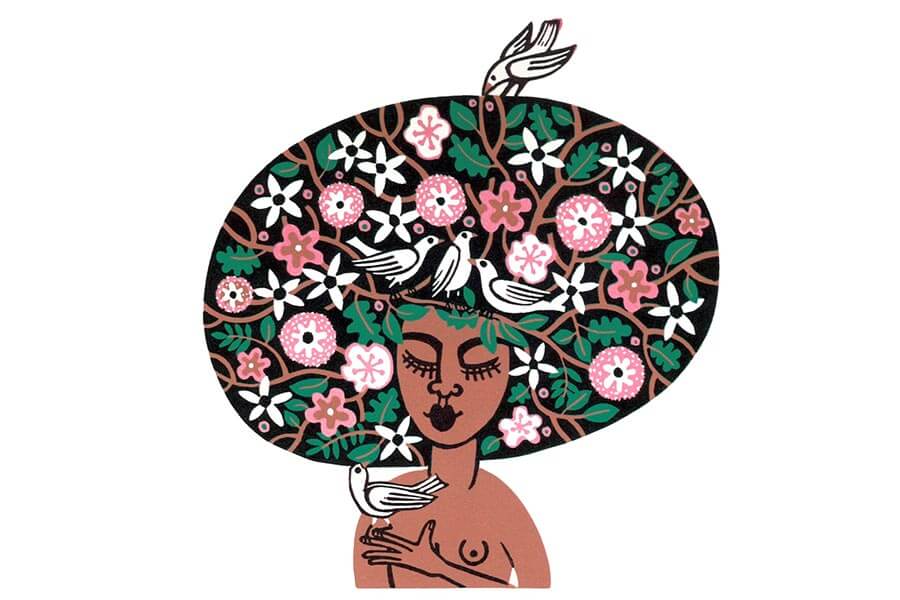
All my linocut prints start from an idea – a seed germinated from the words of a poem, a folk tale or simply a drawing in my sketchbook.
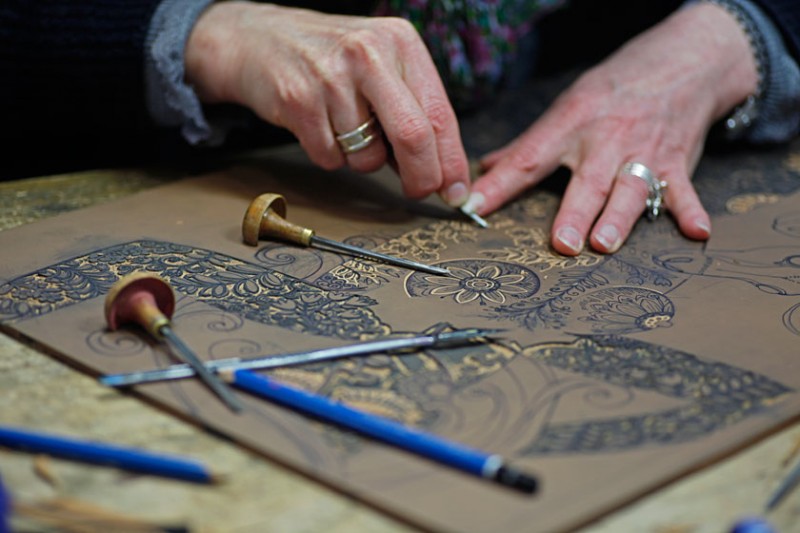
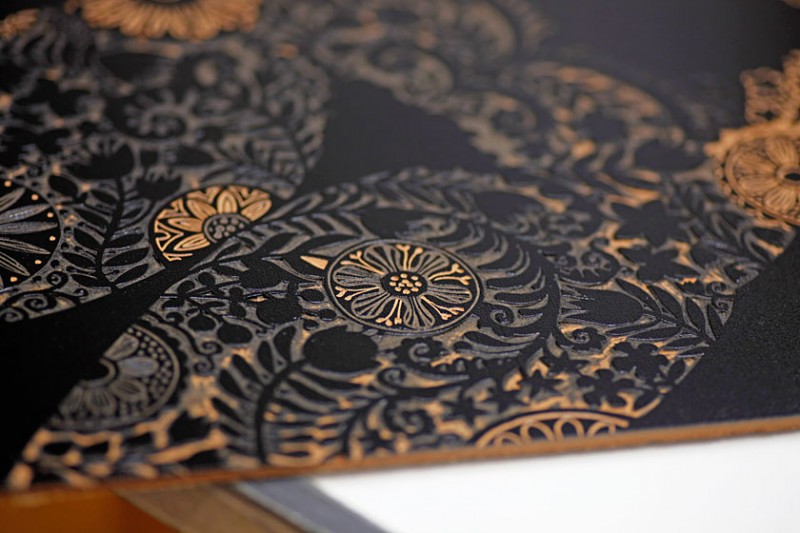
I work up my design as a line drawing and then transfer it onto the linoleum ‘block’. Then I begin the cutting process using hand tools with V- and U-shaped gouges carving out patterns and shapes of ‘white line’ from the block. The areas left uncut on the surface of the block are in ‘relief’ and will appear as blacks in finished linocut.
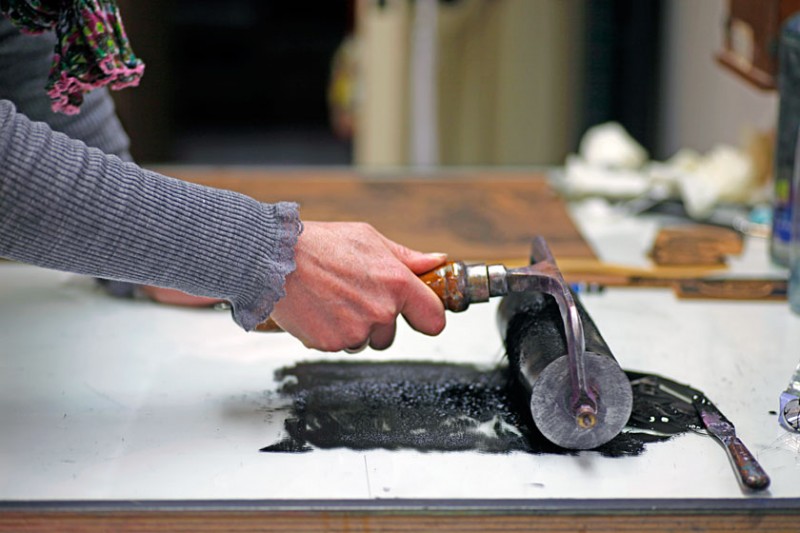
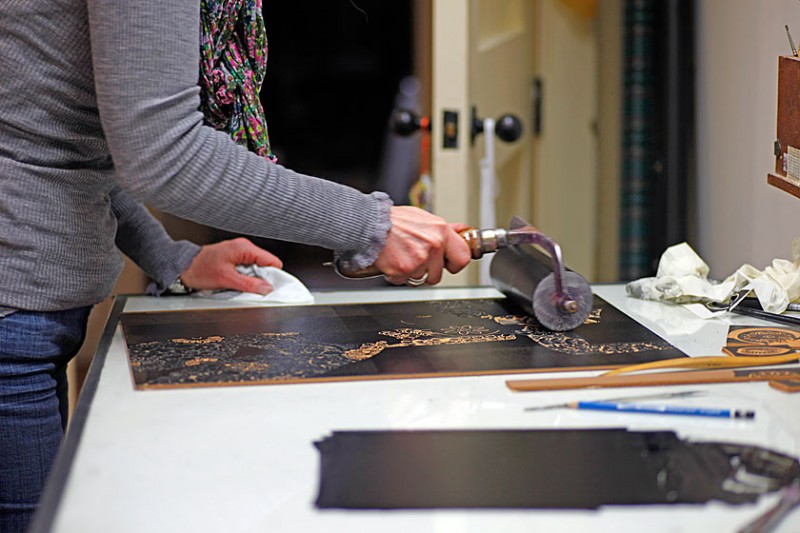
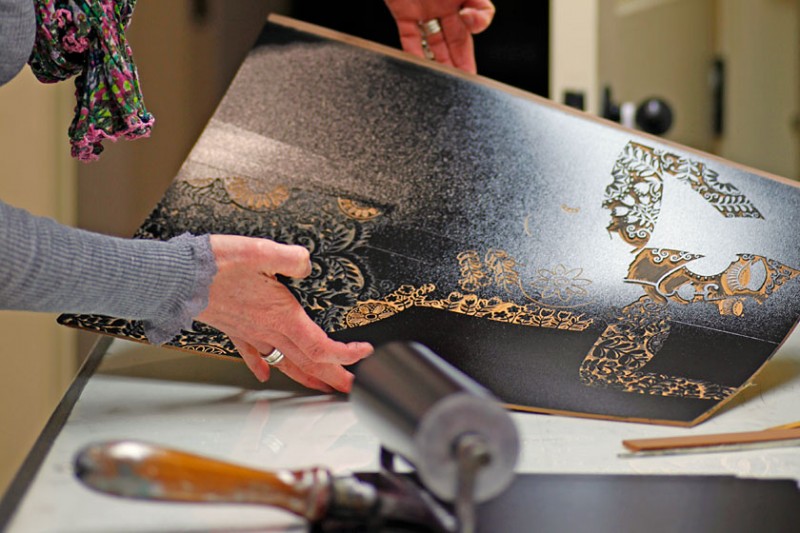
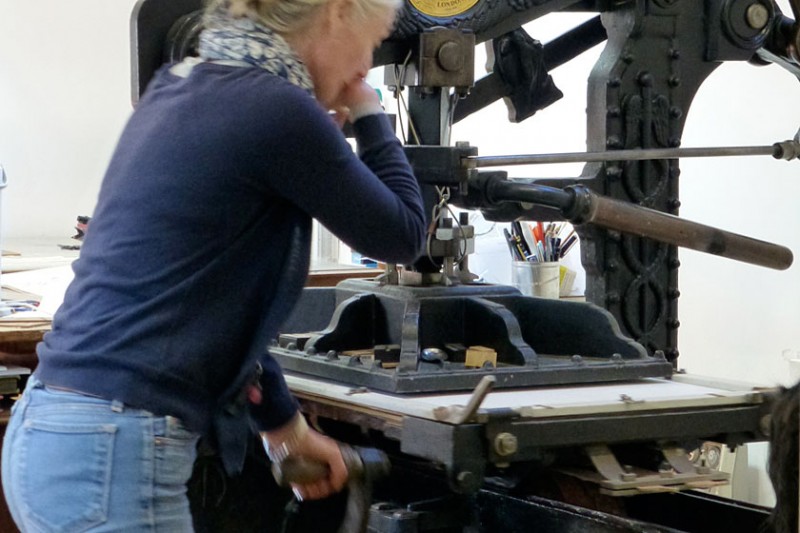
As the design evolves I take a ‘proof’ from the block to see my progress. A thin, even layer of oil based ink is rolled out on a glass slab using a Durathene roller, and then the ink is transferred onto the ‘block’ surface. Once the ‘block’ has been inked sufficiently I put it on the bed of my Columbian printing press and place a sheet of paper on top. Pressure is applied and the surface ink is transferred onto the paper – the impression revealed is from the relief surface of the ‘block’ and is a mirror image of the design that has been cut on the ’block’.
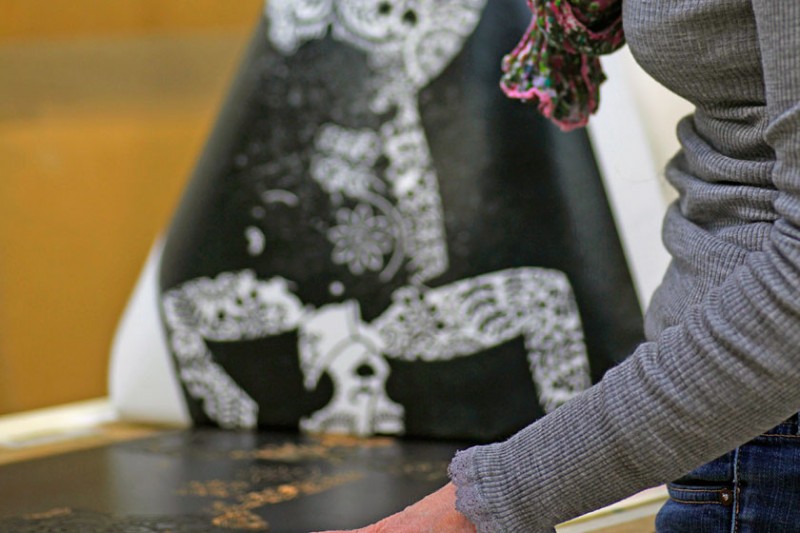
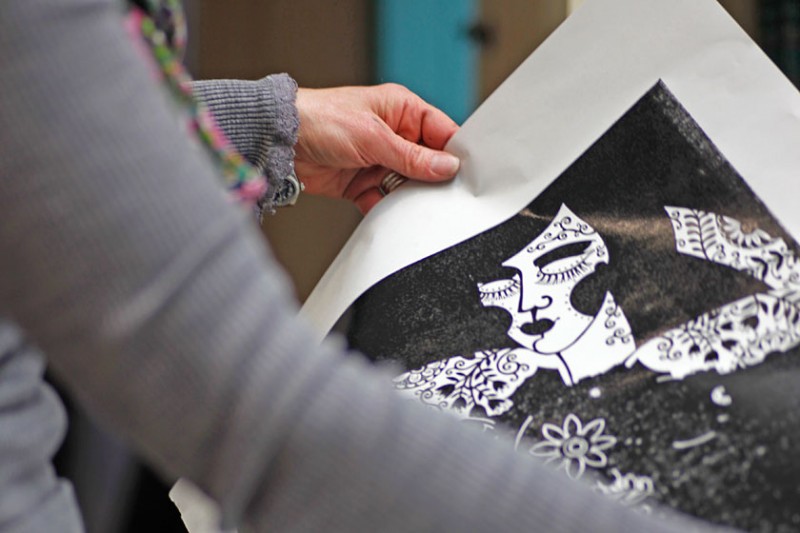
The impression revealed by pulling the paper away from the ‘block’ surface is a ‘linocut print’. I make several proof prints, cleaning off the ink each time and make further refinements until I am satisfied with the cut design. Only then do I pull an edition of prints, each an original work of art, which is then numbered, titled and signed.
I have been making linocut prints for over 30 years and I still enjoy the magical moment when I pull back the paper to see the finished print for the first time.